Why the U.S. Moved on Venezuela — and What BRICS Would Have Changed
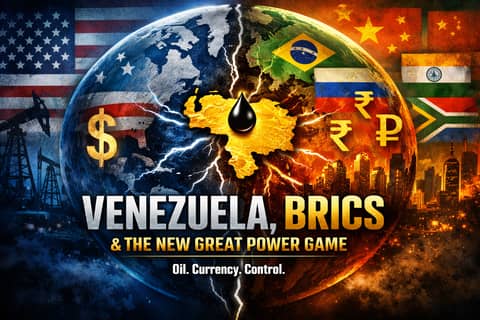
Oil, power, and the quiet war over the future of the global financial system
Introduction
The United States’ actions toward Venezuela did not happen in a vacuum, nor were they driven by a single political administration or ideology. They were the result of a long-term strategic calculation involving energy dominance, financial control, and geopolitical containment.
At stake was not just Venezuela’s government—but whether one of the world’s most resource-rich nations would permanently exit the U.S.-led economic order and align with an emerging rival bloc: BRICS.
Section 1: Why Venezuela Matters More Than Most Countries
Venezuela holds the largest proven oil reserves on Earth, exceeding those of Saudi Arabia. This fact alone makes it strategically critical—but the importance goes far beyond oil volume.
Key factors:
- Heavy crude compatible with U.S. Gulf Coast refineries
- Geographic proximity to the United States
- Ability to influence global oil pricing
- Historical role in dollar-denominated oil trade
For decades, Venezuelan oil helped reinforce the petrodollar system, where oil sales are conducted primarily in U.S. dollars—cementing global demand for the dollar itself.
Section 2: The Strategic Threat of Venezuela’s Pivot Away from the Dollar
Under Nicolás Maduro, Venezuela increasingly:
- Sold oil to China and Russia
- Accepted payment in non-dollar currencies
- Explored alternatives to SWIFT banking
- Publicly discussed BRICS alignment
From Washington’s perspective, this was not just defiance—it was systemic risk.
If Venezuela successfully exported oil outside the dollar system at scale, it would:
- Weaken global dollar demand
- Encourage other energy-rich nations to follow
- Accelerate financial multipolarity
This crossed a red line.
Section 3: Sanctions as Economic Warfare
Long before any overt action, the U.S. employed:
- Financial sanctions
- Oil export restrictions
- Asset seizures
- Secondary sanctions on trading partners
These measures severely damaged Venezuela’s economy, limiting its ability to maintain infrastructure, import necessities, or stabilize its currency.
Supporters framed sanctions as a tool for democracy. Critics argue they were designed to:
- Collapse state revenue
- Create internal pressure for regime change
- Force Venezuela back into dollar-based trade
Regardless of intent, the result was economic paralysis.
Section 4: BRICS — The Path Not Taken
BRICS represents an alternative economic vision:
- Reduced reliance on the U.S. dollar
- Local-currency trade agreements
- Development financing outside Western institutions
- Strategic cooperation among non-Western powers
If Venezuela Had Joined BRICS:
1. Energy Outside the Dollar
Venezuelan oil traded in yuan or BRICS settlement systems would directly undermine U.S. financial leverage.
2. Protection from Sanctions
BRICS banking alternatives could help Venezuela bypass Western restrictions.
3. Deeper Military & Strategic Ties
Increased Russian and Chinese presence in the Western Hemisphere would challenge long-standing U.S. regional dominance.
4. A Signal to the Global South
Venezuela would become proof that countries rich in resources can resist Western pressure—and survive.
Section 5: The U.S. Strategic Blueprint
Viewed through a strategic lens, U.S. actions toward Venezuela align with four objectives:
- Maintain energy leverage
- Defend the dollar’s global role
- Block rival power expansion near U.S. borders
- Deter other nations from exiting the U.S.-led system
This was not about one country—it was about setting precedent.
Conclusion: Venezuela as a Warning Shot
Venezuela became a battleground in a larger, quieter conflict over the future of global power. Whether framed as democracy promotion or security enforcement, the underlying issue remains unchanged:
Control the energy. Control the currency. Control the system.
The BRICS question was never theoretical—it was existential to the current world order.